Showing posts with label John Shirley. Show all posts

Saturday, November 26, 2011

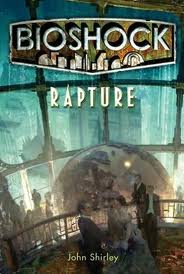
Book Review: Bioshock: Rapture by John Shirley


BioShock: Rapture by John Shirley
430 pages
Tor

If you have followed my blog at all you might have picked up on the fact that my favorite author is cyberpunk legend John Shirley. I am not a fan of the video game, infact I really never ever play modern video games. Infact the first time I ever heard of Bioshock was when Shirley let the cat out of the bag on this project. I really wanted to look at this as an original Shirley piece. It's not that at all, the characters and setting are not really in a Shirley vibe. That is not to say that he wasn't the perfect choice for this book because he really was the best possible author to write this novel.

Rapture is the name of the underwater city that is the haunted house type setting of the the video game. This novel is the prequel that tells the story of how the dream of hyper-capitalist right wing tycoon Andrew Ryan rose and fell. Considering the political upheaval in the story I see why Take-Two thought John Shirley was the person to write this.

Andrew Ryan saw Rapture as the libertarian dream, a nation under the seas hidden from nuclear war(this was in shadow of WWII and the coming cold war) and a chance for the free market to reign. This is the theme of Shirley's upcoming novel “Everything is Broken.” So Shirley does a great job of exploring the challenges that the “free” market of hyper-capitalism would go through in such a packed intense environment.

As someone who never played the video game those are the most interesting parts, not to mention the variety of characters that Shirley had to create to populate this world. The character who becomes the major point of view is the city's plumber (turned bar owner) Bill Mcdonagh who Ryan trusts long after Bill has lost his faith. By that point such a spirit of fear and mistrust has over taken the city.

The weak point for me, probably wont bother anyone who plays the video game. Once the genetically engineered worms that give people super powers showed up I realized Shirley was having fun setting the stage for a video game. I am sure that back story will be fun for anyone who has spent hours playing the game. To me it seemed left field, but like I said I never played the video game.

It seems that Bioshock:Rapture will deepen the understanding and texture of the world created by the video game. That game is considered by many to be one of the smartest out there and the creators of the game found the right author and I think they have done the fans of the game a favor. If your not a fan of the game already I suggest sticking to John Shirley's original cyberpunk like City come a walking or Black Glass.

Saturday, October 8, 2011

Book Review: Embassytown By China Mieville


Embassytown by China Mieville
Del Rey
352 pages
$26.00

I was very much looking forward to this book. China Mieville has got to be one of the smartest genre authors out there. I saw him speak at a book signing at Powells promoting his book City and the City a few years back. Just as I had when I listened to interviews I found myself thinking, wow this is one smart dude. He is in fact one smart dude, and like many of his other novels Embassytown is themed somewhat around the multi-dimensional life-form that is a city. (Another great sci-fi novel about a city is John Shirley's Classic 'City Come a Walkin')

I was excited because the idea of Mieville who has written mostly steampunk-ish fantasy or otherwise surrealist new weird fiction doing hard Sci-fi sounded great. From page one Mieville creates a strange landscape of the far future in way that reminds me of 'Left Hand of Darkness' by Ursala Leguin or 'Crucible of Time' by John Brunner. Were talking seriously speculative fiction, all three novels are in such alien worlds it is sometimes easy to forgot a human wrote the book at all.

It is the tale of a city know as Embassytown on a planet colonized by humans. The planet is home to a species called the Ariekei who speak a unique language that only a few genetically altered humans are able to speak. To speak it they have to be cloned and two doppel humans have to speak it together, these ambassadors eventually because a important part of the Ariekei culture. The hosts become addicted to the sound of their voices, and some ambassadors die, others come into power and the novel explores the social fabric of this alien society.

Some of the things I respect about this book are the very things that frustrated me about it. I am a quick reader and I slogged through this 352 pages over weeks. I often had to re-read paragraphs over and over, especially during the first quarter of the book that felt more like a anthropologist's memoir that a narrative. Of course in the universe of this novel, thousands of years into the future with humanity spread out across the universe Language and terminology itself would be alien to us. Mieville throws us in to the deep end without swimming lesson here. I learned those terms quickly enough, as a brief example deep space is referred to as “The Out,” and space Travelers are “Immersers.” The novel is written as if you already know that, I am not complaining I liked that choice and to a serious genre reading this is not that new of a concept.

Unlike Leguin's Left Hand of Darkness I felt the “gee-whiz” factor of the ideas constantly got in the way of the story. I felt like I was so busy trying to figure out what the author was trying to say about language and decipher the ideas that I had trouble following the narrative.

It would be easy to read this novel and think that it was simply a exploration of the power of language. It is that, but the novel also explores the concept of the relationship between the colonizer and the colonized. I think there are amazing elements to this novel, but I can't give it more than three stars out of five because of what a struggle I had keeping my interest. I respect China Mieville enough that I think there is a strong possibility that I am just not smart enough to follow some of the concepts, but I feel he could have kept the story closer to the surface and it would have been a better novel.

Wednesday, June 15, 2011

Book Review: In Extremis: The Most Extreme Short Stories of John Shirley


In Extremis: The Most Extreme Short Stories of John Shirley
320 pages
Underland Press
(Due out August 2011, Available for pre-order on amazon now)


Every year at the world horror convention writers compete in an annual “Gross-out contest.” If you have a strong stomach the stories tend to be funny or unbelievably awful. One might think when they see the title to this book is 300 pages of gross-out madness. That is however not what makes John Shirley's short fiction extreme. Forget gross, (although a couple of the stories certainly qualify) the extreme nature is found the unflinching peek into the dark realms of the human condition. Opening this book is like staring through one of the worst peepholes you can imagine.

There is no author working in the horror genre today that does a better job of shining light of the horrendous human condition while maintaining a moral center. Horrible and brutal things happen to many of the characters but even the more outrageous and darkly funny pieces Shirley is not mocking or exploiting the suffering of the characters.

I often read collections out of order but Shirley has taken great care to create a rhythm with the stories revolving between comical, brutal, thoughtful and at times moving. Some highlights include CA heart breaking story of a bike messenger trapped in a subway during an earthquake called 'Cram', the haunting ghost tale 'Just a Suggestion,' The hilarious “I Want to get Married says the World's Smallest Man, and to me the most heartbreaking of all was the Science Fiction short 'Call Girl Echoed.' I read Call Girl Echoed when it was first collected in the best Dark Wisdom – It is the story of technology and the horrible dis connect we are headed towards. Shirley is a master at story and non- preaching message, the reality is there is only one better example than this story. Near the end of the collection a powerful story called Animus Rights. Worth the cover price alone, some might think this story is a little heavy handed but considering the title of the collection an extreme point of view works perfectly for me.

I know the word extreme is quite connected to hyperbole, and creates visions of motor bikes doing triple flips but the word couldn't describe this collection better. This best on display in stories which involve characters that are very non-traditional when it comes to Horror fiction. We as writers are taught to create characters that the reader will care about or relate to. Shirley does an amazing job of involving us in characters like methheads, sex-workers, homeless junkies etc.

His masterpiece horror novel Wetbones took place in the same arena and here some of the best stories features characters you don't often see in horror fiction. Stories like 'You Hear What Ray and Buddy Did,' is about bi-sexual junkies turning tricks,'Tighter' is about a single mom/prostitute who has a John who never thinks he is close enough to dying during sex, and 'Just like Suzie' is just as gore drenched as anything by Edward Lee, but this story of a prostitute who dies while giving oral sex to a John is so disturbing that it makes you cringe, feel gross and awful for being amused all at the same time. I am not sure in all my years of reading horror I have been more uncomfortable reading a single story.

Only two stories failed to connect with me, 'Ten Things to be Grateful for' felt like a predictable filler, it felt like a bit of heavy handed messaging, and certainly Shirley has plenty of amazing stories that could have filled that spot.

The horror short story is an art form all to it's own. Stephen King and Clive Barker in my opinion are masters at the short tale, they sometimes suffered from the word count. King has Skeleton Crew and Night Shift as amazing examples of master doing some of his finest works. Take any of six books of blood and you could teach master classes on the short story. In Extremis to me is the third in a trilogy of collections by John Shirley that rank that highly. Black Butterflies (which one the international horror award and the Bram Stoker), Living Shadows and now In Extremis. Any serious student of the short story needs all three books on their shelf.

Wednesday, December 8, 2010

Book Review: The Black hole of Carcosa by John Shirley


Kamus of Kadizhar: Black Hole of Carcosa
John Shirley
1988 St. Martin’s press
(Out of Print)

I have not worked my way through every book that cyberpunk and extreme horror pioneer John Shirley has written, but I have read the majority. Black hole of Carcosa is the most bizarro one I have read so far. 1988 is way before the bizarro literary movement kicked off but this book has more in common with the likes of D Harlan Wilson than it does the vulgar insanity of Carlton Mellick III.

Set on Darkworld a future human colony where technology doesn’t work but magic does. This is the surreal setting where noir style Kamus of Kadizhar is the world’s only detective.

I wouldn’t say this book is a satire, but it is as tongue and cheek of a science fiction novel I have read in a long time. So even though the plots are very different that is why it reminded me of D Harlan Wilson’s amazing science fiction surreal comedy Dr. Identity. If you compare the two Dr. Identity may seem a little bit more gonzo consider the time and place in his career that John Shirley was at.

Rudy Rucker was in a lot of ways cyberpunk’s comedian, and Shirley was at the time in the middle of a dark trilogy of world war III novels. The Song Called Youth Trilogy was a brutal look at the growing conservative fundamentals, so a whacky tongue in cheek surrealist comedy at the same time was a bold move in 1988.

Now there is a movement and peers that support this kind of off the wall novel, but at the time I think this was a pretty bold novel. Bizarro fiction fans need to find this book if they can. Maybe if its cult status grows Shirley can write sequel set on the punk rock planet mentioned on page 43. That would be awesome.

Tuesday, October 5, 2010

Wetbones revised and re-issued.... Tribute Part 1


I have been reading horror novels for a quarter of a century now. Since I discovered Clive Barker and Stephen King in the 7th grade I have read several hundred horror novels and equal number of science fiction. I have read horror novels that effected me emotionally like the family tragedy in King's The Shining, terrorized me like McCammon's vision of nuclear aftermath in Swan Song, Poppy Z. Brite made me squirm in disgust with Exquisite Corpse, and Barker expanded my thinking of the fantastic with The Great and Secret Show.
One novel has affected me on all those levels deeper than any other. John Shirley's 1990 masterpiece Wetbones. I think of this book as Requiem for Dream written by Lovecraft and directed by a young David Cronenberg.
John Shirley is a master at using the horror and science fiction novel as means of making a socio-political point. Wetbones is very much a horror novel about addiction, and while it drags the reader through a disgusting and hurtful gutter that reflects real life all too well it also has monsters.
Freaky as hell monsters, probably one of the sickest and most awful serial killers in print, without a doubt my favorite horror novel ever written. How about some other opinions...


"John Shirley is an adventurer, returning from dark and troubled regions with visionary tales to tell. Wetbones is a wild and giddy ride, confronting the reader with marvels and horror in equal measure. I heartily recommend a journey with John Shirley at your side."- Clive Barker

"In Wetbones John Shirley serves up the bloody heart of a sick and rotting society with the aplomb of an Aztec surgeon on dexadrine..." --ALA Booklist

"Some of the most gruesome imagery ever placed between two covers to catalyze a potent tale of physical, psychological and spiritual depravity and redemption...This is horror at its most visceral and true." Publisher's weekly

"Utterly convincing and terrifically fascinating...Wetbones is a knock-down, kick-ass piece of writing." -- Ed Bryant, Locus

"Wetbones is one of the reasons that John Shirley is one of my favorite authors of all time. He not only gets under your skin, he forces your mind to go to places strange and uncomfortable, yet unquestionably familiar. He scares me to my soul." - Filmmaker Sunni Brock

"When I was just out of high school I was a rabid fan of horror. I was already a John Shirley fan because of novels like Dracula in Love and Cellars, but, in my mind, horror was mostly about what what was done to people by others. Wetbones introduced me to a new concept - the horrors that people visit on themselves, and allow themselves to be subjected to. - Musician El Queso

"I've been reading John Shirley since his earliest stories and novels. I still have my Mark Ziesing Books edition of Wetbones. It's a great --and truly scary -- horror novel. One of the things that gives it it's power is that John keeps one authorial foot firmly planted in reality -- something that infuses gritty strength through much of his work, right up through his latest novel, BLEAK HISTORY." - Long time Shirley fan Robert Curry

"Wetbones has undoubtedly joined the pantheon of my favorite horror and science fiction works. John Shirley seamlessly blends social commentary with his horrors, without sacrificing fright or being heavy-handed and overly didactic." Ian Duncanson Librarian

Wetbones revised and re-issued.... Part 2 The Author interviewed...


John Shirley is the author of close to thirty novels and collections. He is most well known as the co-screenwriter of the The Crow. But his classic 1990 Horror novel Wetbones is what we are gathered here to discuss.

I first read Wetbones in 2007 after author Cody Goodfellow told me it was John Shirley's horror masterpiece. It was the first novel I read living in the pacific northwest, on bleak rainy nights I was in it deeply from page one. At the time I was already active on author John Shirley's message board. While he was always friendly about it, there seemed to be a hesitation on John's part to talk about Wetbones.

Stephen King had been the same way with one of his horror masterpieces Pet Semetary and if the rumors are true King had not wanted to finish the book at all. A few months back John said he was revising and releasing Wetbones and I saw a unique opportunity. I wanted to talk with John about this fantastic masterpiece of horror fiction 20 years later, with it now fresh in his mind. Thank John for doing this brutally honest interview...


David Agranoff: You have said before that you were using this novel as catharsis, and you were going through a crisis in your life. What can you tell us about that time personally and how influenced the direction of Wetbones?


John Shirley: I had been clean from drugs for a long time,then had a relapse, when some harsh stuff happened in my life, and the relapses got more frequent, and it got very bad. I had no dignity in my life. I wasn't living on the streets but nearly got killed and it was very hard on anyone close to me. So the addiction framework of Wetbones, the whole Akishra metaphor, was a cathartic effort to deal with that, to make myself see the fullest, ugliest truths of addiction clearly and straight on and without any rationalization. Also the book, as Robert Palmer (the critic) noted, is a very angry one and it released all kinds of pent up anger in me. It's also about Hollywood--well, I had unpleasant encounters working in the cinematic and television vineyards, under the lash of the overseers, and I vented about that too. So I was able to meld all this together pretty well into one horrific story...

DA: You said when you were editing it you had a hard time re-reading it. What feelings did it bring up for you personally?

JS: Since I wrote it at that time in my life, re-editing it brought up memories of the context, in my life, in which it was written. There were feelings of shame and sorrow and anger and horror. I don't think it'll affect a reader that way! I assume the reader will feel some emotional involvement, and a good deal of horror. I hope the reader's pulse will pound...We want to give them that energy...

DA: You have been open about the fact that you were in recovery from addiction. Was Garner's journey in the novel your worst nightmare?

Garner was partly me, and partly people I knew. In a way I went on that journey, without all the bloodshed, though I found myself in very intimate circumstances with murderers, with psychopaths. I felt, afterwards, like Dante, a bit...

DA: How hard was it for you to write about a killer like Ephram?


JS: VERY hard. He is just one of the horrific aspects of the novel--there are all kinds of horrors in it, but he is a serial killer and I do not write about them easily, I am a person unable to deal with the idea of killing for pleasure, I find it difficult to identify with someone capable of suppressing all empathy for others. I did make a point of showing more than one side of that character, of showing that he is lonely, that he is desperately trying to make some kind of connection, that he is trapped. It's as if he's a ravenous, starved caged beast, and he tricks people into coming into his reach,pulls them into his cage--but someone has put HIM in the cage in the first place and made him what he is...But writing from his point of view--very difficult for me. I tried to leaven it with some morbid humor at his expense..

DA: The re-print comes with a short sequel Sweetbite Point. Can you tell us a little about it?

JS: It's a short story I wrote for an obscure anthology soon after Wetbones. The street minister character and his daughter seemed to have life left after the novel was done and wanted to resolve their lives a bit more. So they had to do it through that story. That character, the Street Minister, Garner, is also based on a side of me. I do identify with him--and his relapse.

DA: Now that you have re-lived this novel, that many call your masterpiece, Re-reading did you think about extending the story with a full sequel?

JS: No, it was hard enough to go back to it! I was just glad to be able to revise it, somewhat, and do some judicious editing. It's a much stronger book now.

DA: I talked to a friend who compared this novel to Clive Barker's work. Barker indeed blurbed it, but many don't realize you wrote a psycho-sexual horror novel in 1980 called Cellars long before anyone had heard of Barker. He seemed to revisit sexuality and horror often. For you Cellars, Wetbones and maybe Dracula in Love seemed to explore this issue do you see a strong connection between sexuality and extreme horror?

JS: There is, I guess--perhaps because I had been molested as a child, perhaps because I had difficulty with my own subsequent sexuality. I never imposed it on anyone in the sense of rape or stalking or something, I just had difficulty with fidelity, a tendency to sexual addictive behavior. . .And to me not being in command of myself is a horrific thing, it makes me feel like being possessed. Also in that whole scene, I often mixed drugs and sex and it got very nightmarish. Additionally I visited some pretty, well, outre underground sexual scenes...I remember meeting some "vampires"--they were not supernatural, just people into sexual "blood play". I didn't participate. I am all for sexual freedom between consenting adults and am not against "wild" sexuality. I just like to be in command of my own sexuality. For myself I have chosen monogamy at this time in my life.

DA: This is a very angry John Shirley, Demons while very funny at times and often tongue in cheek is also an angry book. On the other hand you recently wrote what I consider to be a very hopeful masterpiece the Other End. How much do these emotions drive you as an artist?

JS: What is that line from John Lydon and Public Image Ltd, "Anger is an energy". And it is, it stoked my writing, and it has something in common with punk rock, and I was a punk rock singer (http://www.myspace.com/johnnyparanoid) and in that anger and creative energy were almost one unified thing. The Other End (which is being re-released in a newly re-edited-by-the-author form by eReads) was sparked partly by anger at the writers of the Left Behind books and people like Glenn Beck who exploited apocalyptic fantasy. Why should an apocalyptic, judgment day scenario be "owned" by the right-wing? Why should they revise the world according to *their* lights? Made me angry to think about and I saw a chance for a great little allegory...

Interview with spoilers continues in part three...
Wetbones revised and re-issued.... Part 3 The spoiler interview...


In this part of the tribute John and I continue our discussion of Wetbones with spoilers. I think this is important. I certainly don't want to ruin the experience of reading Wetbones for anyone. However for those of us who have read this masterpiece I think we need to explore this work deeper. Certainly I believe young horror authors could learn a lot from this interview.


David Agranoff:Ephram is one of the most disgusting serial killers I have read about in fiction. He controls his victims psychically, by feeding them pleasure. Is Ephram or Akriha addiction itself?

John Shirley: He uses a method that combines the AKISHRA methods and his own techniques--there was in fact some kind of Hindu myth about "soul worms" that feed off people who are addicted to things. That was the inspiration for the book. They are the Akishra. Ephram's power is to make you take pleasure in doing things you hate. Which is itself a metaphor...and he takes ordinary pleasure, which is fine, and twists it, into something monstrous.

DA:An early scene that really hit me was when Ephram tells Constance to leave, he knows she wont, the addiction to him is too strong. When he twists her pubic hair and tells her to like it is one of the most painful scenes I have ever read. Is this the nightmare of knowing you're in pain but don't have the ability to escape essence of addiction?

JS:Yes in true hardcore addiction there are few, if any, who don't know they're hurting themselves by it, and eventually most lose interest in the "romantic" side of it (as in Lou Reed's beautiful and powerful but perhaps unfortunate song "Heroin") but they still can't stop. "You'll destroy yourself and like it" the addiction tells us. "YOu'll hurt yourself and beg for more". It's not masochism per se--it's beyond that. It's uncontrolled self destruction. Suppose you had a powerful corrosive acid, stronger than hydrochloric acid, and somehow managed to combine it with a pleasure inducing drug so that if you dumped it on your flesh the pleasure overwhelmed the pain and as your flesh burned away before your eyes you felt enormous pleasure...till you died. It's sort of like that. However, it's also true that after awhile, the pleasure part stops--but you can't stop doing it somehow. You keep going long after it ceases to feel good...It's the rat pressing that lever...

DA:Who is the More Man in the novel? And is he based on someone you knew in Hollywood?

JS:No he's based on *types* of people. Maybe some of Kenneth Anger's "Hollywood Babylon" was infused into him...There are people that corrupt and venal but it's mostly hidden away inside them. With him it's wormed (as it were) from the inside, to show itself on the outside...like gangrene from a bullet wound spreading from inside to show on the flesh...

DA: The chapter where Garner has to identify the finger is heartbreaking, for me it is up there with the death of the dog in I Am Legend, one of the most heartbreaking moments in the genre. How did you get to core emotion of that moment?

JS: It fit with the story--it set Garner up for his relapse, which was something I wanted to describe. God knows what he went through is very vivid to me, and a writer likes what's vivid. But also I felt that Ephram would make a move like this and it's a pretty good plot twist too...

DA: Sam Denver and the Doublekey ranch has an old time Hollywood meets Eyes Wide Shut kind of thing going on. But it was written years before that film. What was your inspiration for the part of the novel?

JS: Well I did go to Plato's Retreat and the "Hellfire Club" in NYC a bit, and saw some heavy duty scenes, and then in the punk rock scene, you know, things happen, but some of it was research, based on reading, and some of it was "what if" thinking based on the idea of the Akishra...

DA:The Akisha is a very Lovecraftian entity, but your creation. An unseen evil creature that feeds off our addiction. If that creature was real would it be behind all addiction?

JS: The Akishra as imagined here is my creation, though, as I said, based a little on a Hindu story. To me it was mostly allegory but the idea in the book is that our brains are somewhat primitive and wired for addiction, and the Akishra take *advantage* of that weakness and encourage it and thrive on it and make it far worse and more prevalent. So it'd be sort of like a meth dealer. He's not the drug but he sells the shit...

DA: As dark and brutal as this novel got it seems important for you to remind readers considering the book there is a hopeful ending. Is that a statement about recovery?

JS: Yes I was in recovery and I have seen lots of people recover. I've said before that some of the worst people I've met were addicts in full bloom of their using, and some of the best people I've met anywhere are *former* addicts or anyway people in recovery (some like to insist that you're always an addict, you're just not using for ten, twenty, thirty years at a time). They have to be better people to stay clean. It's not just a case of let's pull a happy ending (all things being relative--it's not totally happy), out of the book, it's that I do see hope and I want to point to that light at the end of the tunnel.

Wednesday, August 4, 2010

Classic novels revisted Part one: Logan's Run!


Logan's Run By William F. Nolan & George Clayton Johnson

I read Logan's Run many years ago and decided to revisit the classic for several reasons. Least of which has been getting to know Bill Nolan who lives across the river in Vancouver now. The main reason I wanted to re-read this classic and and comment on it is the looming re-boot. Every year or so a new Logan's Run movie is discussed. For awhile Bryan Singer(X-men, Superman Returns) talked about making it. For one reason or another it has not happened and it's too bad because a modern take on the classic Science fiction novel is overdue.

Recently Bluewater comics have been working with Bill and his editing partner Jason V. Brock to Logan's Run back into comics. They look great and have been selling well. So I am sure that doesn't hurt the movie happening. Nolan worked with the Bluewater artists to give an idea where the author thought the look of Logan could go. Certainly a more realistic and less psychedelic look than the 1976 movie would help.

Recently super producer Joel Silver (the Matrix, Die Hard, Lethal Weapon movies) took over the production. Akiva Goldsman is also producing, I have liked some of Goldsman work even though he often blamed for the worst batman movie ever(Batman and Robin) I think Goldsman's writing on I, Robot and Constantine were solid, the finished products suffered from casting problems not the script. Alex Garland, the screenwriter of the amazing Sunshine and 28 Days Later has been hired to write the script. He is a great character based writer who is also a novelist. Great choice, I hope that bodes well for the film.


Back to the novel...

The novel is tightly constructed minimalist science fiction adventure which is short in word count but long in ideas. It is amazing how much story is conveyed in 130 or so pages. You get your money's worth that is for sure. It has been suggested in many articles about the novel that Nolan did the bulk of the writing and the concepts were largely those of George Clayton Johnson who often remembered for Kick the Can twilight zone episode and being the original screenwriter of Ocean's 11.

I don't know how the division of labor went, I know that the novel is masterwork of science fiction. The story of future where population is controlled by the age 21 term limit. At the end of your twenty first year you have a last day to celebrate before going to “sleep.” Logan's job is to run down the people who will not accept there fate on last day. Of course as his Last day approaches Logan takes on the mission to find the elusive Sanctuary the runners seek. He tells himself that it is just a patriotic mission but is Logan questioning society?

Logan's Run as science fiction could not be more out of date. That is one of it's best charms. As statement about the times in which it was written Logan's run is genius. Released in 1967, during the times of flower power and protests. It was a time when the young said “never trust anyone over thirty,” and add to it the first real concerns about the population growth on earth. What would happen if the youth had there way?

What happens if a world evolves where no one grows older and wiser? If the novel lacks anything it is a deeper look into those issues. I am hoping the comics or the film really takes a look at that. Certainly if I were making the film I would cast actors who were really teenagers, young people, who look and feel young. The world should feel young, and if the actors don't look like kids some of the power of the concept for me is lost.

The 1976 movie is terrible in my opinion, it doesn't help that I re-watched it after re-reading the novel. The last act of the movie drags and that is sad because the novel is so amazingly paced. The scene with Carousel is plain weird and makes a statement about the utopia society having some kind roman like amphitheater that makes no sense with the utopia they were trying to envision.

The action scenes are goofy and hardly exciting, again that might be my disappointment after reading tightly written novel. Johnson and Nolan created an enduring classic that is treat for for Science fiction fans the the first time or being re-visted. Fans of the film will be surprised how different the book, it is not faithful adaptation so there is still a story to discover.


Up next part 1.5 a brand spanking new interview with author William F. Nolan.

The next novel in this series will be John Shirley's horror masterpiece Wetbones in honor of it's 20th anniversary re-issue.

Monday, November 23, 2009

Book Review: Transmaniacon by John Shirley


Transmanicon By John Shirley
271 pages
Out of print (1978)

There is no writer working today in both horror and Science Fiction whose body of work I enjoy more than the work of John Shirley. While he doesn't get the credit he often deserves and i know I have said this over and over. He was cyberpunk before there was a name, he was splatterpunk before there was name. His early ground breaking work with City come a Walking in Science Fiction and Cellars in horror fiction is known with the serious fans of the genres. This debut Science Fiction novel which was written after but published before his early horror novel Dracula in Love.

Transmaniacon is super nutso off the wall original work of pre-cyberpunk science fiction that is like no other book I can think of. It is also a great work out-of -date old school science fiction.The plot centers on "The barrier" a huge shield erected as a nuclear defense over the united states in 1989. This book takes place in 22 century two hundred years after a nuclear conflict devastates the world outside the barrier. The U.S. has broken up into several city states that are each very different and all of them are at war with at least one other city. Beyond the barrier is a mystery, is nature claiming the earth, has chaos taken over?

The main character Ben Rackey moves pretty freely working as a professional instigator for corporations and states that pay him. Ben is is hired to steal a device, the "Exciter" which can be used to direct individuals and crowds by enhancing their strong emotions of anger, saddness etc. Ben sees this device as the keep to accomplish his lifetime goal to bring down the barrier.

Ben Steals the exciter and thus begins an adventure across the weird landscape of the united states under the barrier. The level of strange environments and original creations range from the disturbing to the hilarious. The tone shifts dark socially political themes to almost Douglas Adams-ish humor.

Some of the things you'll find in this novel include Fly and owl shaped -nul grav cars, Dolphin pilots who lead blood cults, fist fights with conjoined octuplets, two century old frozen biker gangs, Musac used as a sedative, motor controlled mindless slaves, brainwashed mercenaries, and my personal favorite - the flesh tractors which are genetically engineered giant hands that are used as beasts of burdens.

There is more, much more. Transmaniacon is early work and does not show the mastery of of political allegory that Shirley became. There is alot being said here, I took from it a subtle message of the negatives of US isolationism. A basic statement against the status quo most of all it is an excellent and imaginative piece of speculative fiction.  

Tuesday, October 13, 2009

Book Review: Dark Entries A John Constantine novel


Dark Entries By Ian Rankin
A John Constantine novel
214 Pages
DC Vertigo ( Vertigo crime line)

My favorite comic book of all time is Hellblazer, I followed the first 50 or so issues before I became a a broke activist and lost track. Over the last couple years I caught back with the occult magician John Constantine. Well I didn't think the movie was as bad as some people did I find the Americanizing of Constantine to be awful. Still it's not that bad.

Vertigo has done an amazing job of maintaining the quality of Hellblazer graphic novels and novels by keeping the caliber of his writers strong. Garth Ennis, Warren Ellis, Mike Carey, John Shirley and now international bestselling crime and detective author Ian Rankin. I have to admit I never heard of the man before getting this book in the mail. Best know for a series of books about a detective named inspector Rebus. I've been told by one friend that his writing is criminally good, another said he thought Rebus and Constantine would make great drinking buddies.
For those of you who don't know John Constantine began life as a small character created by watchmen author Alan Moore in an issue of Swamp Thing. A former Punk rocker and dammed occult magician, JC is a badass character - one of the best the genre has ever seen. The last new Hellblazer work I read was John Shirley's excellent novel Subterranean.
This is a very different Constantine book. It's small hardcover in Vertigo's new crime line it is a black white book with minimalist drawings. I am used to Hellblazer in bold colors, and since it is often gore drenched pages it took some getting used to.
Rankin weaves a patient Constantine tale but there is obvious love for the character, at first it seems like modern re-telling of a classic haunted house tale. John is asked to oversee a reality show that takes place in a haunted mansion. Things start taking life of their own and producers need John to go in and fix things. John suspects that the producers are not whom they seem to be, the stars of the show might not be who they appear to be. So what does our hero do but jump into the mystery.
There is an excellent twist that takes the book in a more classic Hellblazer path but Rankin does a wonderful job building up his story. Oh well I suppose I'm going to have to check out his books now. Hellblazer fans will really dig this different take on their hero. Pick up this book!

Wednesday, September 23, 2009

Book Review: Bleak History by John Shirley


Bleak History by John Shirley
370 pages
Simon and Shuster

Anyone who has read my blog knows that John Shirley (Co- Screenwriter of the crow) is one of my all time favorite authors. An underrated trailblazer in both science fiction and horror, Shirley's cyperpunk pre-dates William Gibson and his psycho-sexual splat punk horror pre-dates Clive Barker. While Shirley doesn’t have the sales they do he has the respect and blurbs of his peers. I suspect in this culture where TV and movies carry more weight than cult novels, one great adapatation is all it will take for Shirley to get discovered out of the genre ghetto.

The project that is most likely to do just that is Bleak History. Shirley’s most mainstream novel BH is more easily tagged in the popular highly marketable genre of Urban Fantasy. In the first 100 pages I was worried this would be my first negative review of a John Shirley novel. The idea seemed simple and almost designed to be marketed in the urban fantasy thing.

The plot sounds simple on the surface. The thin line between the world of the living and the dead is breaking down. Certain people like Gabriel Bleak the main character have powers over the supernatural. There is agency that is monitoring the magic outbreak and recruiting people. I’ve heard reactions to the plot as it sounds kinda like X-men, no not really but I admit I was yawning a bit in the early pages. It is the extremely weird and original plots of Shirley's novels (check out City come a walking or Three Ring Pychus for out their plots) that set his work apart from standard Science Fiction or horror.

I should have trusted Shirley to rise above and make a very original piece. Once the details of the story start to unfold amazing things happen. I dog eared page 159 as the page where my imagination started cooking with the novel. It's not that exciting stuff didn't happen before that, it's just that's when the story really took flight. The hard part for me as a reviewer is that a reader deserves to discover these details as the book unfolds. As the thin line between the natural and supernatural falls apart the thin line between our rights and tyranny also falls.

In many ways Bleak History is about how we as a society or a country deal with threats. What if the threat was not terrorists, but magic? Would the same country that has two political parties supporting the patriot act and one defending it's use of torture do to protect it's self from a world where the power of the supernatural was really in the hands of the people.

Shirley is the master of the horror novel as political allegory. These are not beat you over the head - in your face allegory, and despite the obvious statements on rendition and torture there is deeper message. His novel Demons may be his more biting socio-political satire, but I am hoping that Bleak history will be a bridge that will bring new readers to his long chain of brilliant novels. Read it!

Thursday, August 20, 2009

15 books that effected me the most.


15 books that effected me

Here are fifteen books that effected me deeply and in profound ways. They are listed in the order for which they inspired me. I have been meaning to do this for awhile...

1.Lucky Starr and the Rings of Saturn by Issac Asimov – This insanely out of date Sci-fi adventure series written for kids in the fifties were re-published in the 80's with cool looking covers. I thought this one looked so cool I asked my mom to buy it for me. I was too young to read it myself, so she read it too me. We figured out quickly it wasn't the first book and read all six together. By the time we finished the last one I was helping out with the reading.

They made me a fan of reading, taught me the power of prose story telling and were something my mom and I bonded on. I am pretty sure she was not a huge fan of the books but kept reading them to me because I liked them. Lucky Starr was the first character I loved who wasn't in movie or TV. I owe those books in a way I can't explain fully.

2-3.The Shining/ Skeleton Crew by Stephen King: It's hard not to picture the movie in your head but it is truly a masterpiece of horror fiction. That changed my perceptions of what horror fiction was. The first book to make me feel nervous reading it. As an adult the tragedy of the Torrance family broke my heart.
One of the most solid books King ever did was Skeleton Crew. A master at the top of his game. The Raft is one of the most perfect horror shorts ever written.

4.Books of Blood by Clive Barker Perhaps the best horror fiction short stories written by anyone. The blend of fantastic,bizarre and visceral has been unmatched before or since. Reading these stories made me want to create like he did. Made me want to use words to evoke emotions.

5.Diet for a New America by John Robbins: The first really powerful book about Veganism. It never ceases to amaze me the mountain of evidence that backs up being vegan. I felt empowered reading this that I could change my ways and have a positive impact on the world. If you haven't read it his more recent book Food Revolution is even better.

6. Vanguard #1 : So it's an 8 page zine. The first issue of the magazine of the hardline movement was basis of my ideology from 1994-99. While I disagree with parts of it now, I can still quote off the top of my head. It was “The time has come for a movement and ideology both physically and morally strong enough to do battle with the forces of evil that are destroying the earth...” Look up hardline on Wikipedia it's actually pretty close to the truth.

7-8. Ishmael and Story of B by Daniel Quinn: For awhile the cult like status DQ was getting from his fans annoyed me but they are life changing reads. These books are humbling, so much of what we take for granted is simply brainwashing by our culture. I think everyone should read these two.

9. I am Legend By Richard Matheson: Perhaps the best living author of the fantastic. This novel holds up amazing consider it was written when Eisenhower was president. Better than most modern horror novels, it is tense, scary, political, character driven and an over all emotional masterpiece. Every time I read it it teaches me something new about the craft of horror novels. Dog chapter breaks my heart every time.

10.Demons by John Shirley: I had started writing screenplays and was dabbling with scripts. I would divide my time between my activism and writing. This was the novel that taught me I didn't need to separate my fiction from my activism. Demons is a brillant short novel about corporations sacraficing human lives not only for profit, but...well read it. Genius book.

11.Swan Song By Robert McCammon : Sure it's a rip off of the Stand. In so many ways it's better. A bleaker tale that never drags in it's 900 pages. Just when you think a novel can not get darker or bleaker this epic adventure in the wake of a nuclear war is one of the best novels I have ever read. This book taught me a lot about keeping the pace and interest going.

12.The Sheep Look Up by John Brunner: Written in the 70's this Sci-fi novel is the silent spring of Science Fiction. I have tried to create that feeling with my third novel The Very Last Drop. This was a important work for it's time, but we need a new novel to address new over looked environmental issues.

13.The Book and The Sword by Louis Cha: Martial arts fantasy, one of the few translated into english. This expanded the arena of Martial Arts fantasy(Wuxia Pan)for me and was the reason I wanted to adapt my screenplay Hunting the Moon Tribe(coming soon from Afterbirth Books) into a novel.Recently adapted into a passable TV mini-series in china with fights directed by one of my favorite directors Ching Siu Tung.

14.Wetbones by John Shirley : The first book I read living in the northwest was Wetbones. This is a horror masterpiece in part it is about addiction. It is also about losing control of ones self, it's also disturbing on levels few novels have ever reached. Lovecraftian at times, like an 80's cronenberg body horror at times, brutal as a novel could get. It is an overlooked masterpiece.

15. Always coming home by UK Leguin : When people think of anarchist fiction Ursla K Leguin's science fiction masterpiece of the late 60's The Dispossessed is often the first book mentioned. But if you were to ask the author what is her best work of anarchist fiction she would say Always Coming Home. This is a dense hard book to read, it is not easy reading but this tale of anarchist culture in a somewhat primitive far future north California is mind expanding and will give hope that humans could one day live like this.

Monday, February 23, 2009

Book Review: Black Glass new Cyberpunk by John Shirley!


Black Glass by John Shirley

Anyone of who actually reads my blog regularly already knows that John Shirley is one of my favorite authors. So the fact that I am loving and reviewing his new book is not exactly a shocker. If you don’t know who John is he was vocalist for Portland first really great punk band Sado-nation and has since then been writing amazing novels like Wetbones, Crawlers and Demons to name a few. He also wrote lyrics for Blue Oyster Cult and the screenplay for “The Crow.”

In the late 70’s through the early 90’s John was one of the leading authors in a science fiction sub-genre called cyberpunk. The most famous of cyberpunk books was by William Gibson most well known for his novel Neuromancer.

There are other great cyberpunk authors my favorites being John, Rudy Rucker, and Bruce Sterling. All of which were influences on my cyberpunk novel I finished in January called “The Very Last Drop.” All these guys traded letters back in the day and most of them had worked together on short stories. John’s cyberpunk novels were some of the first. Transmanicon, City come a Walking and The eclipse trilogy were ground breaking. City come a walking is like a punk rock Dark City(15 or so years before John’s Crow director made that movie). City is must read of mind bending science fiction and it’s hard to believe it was released in 1980. Ahead of it’s time is an understatement.

So this brings us to Black Glass. Last year Shirley stunned his fans saying he was returning to cyberpunk, writing a new novel based on an old idea. Sometime back in the day he and William Gibson had developed a screenplay together. Nothing came of it but the idea stayed with John so recently he asked Gibson if he could have a go at it.

The result is the best modern crack at cyberpunk since Richard Morgan’s Altered Carbon. That book won the Phil K. dick award on it’s release and it would a crime if Shirley didn’t get one here.

Sure the technology and the setting is modern but this novel feels like 60’s sci-fi pulp novel in tone, probably more so than Shirley’s earlier Cyberpunk novels. That is far from an insult coming from me I love retro sci-fi. Of course the only thing retro here is the noir tone.

This future detective novel is wonderful mystery that doesn’t unfold as easily as some novels do. When it’s over this is a rare case of shit “I could totally read another 100 or so pages of that.”

The story is of a hard-boiled ex-cop who goes to prison to protect his brother. In prison they “unmind” him and use him as a slave. After four years he is released and the forces that were after his brother are immedialy on his case. There is murder, intrigue, nasty corporations and great political messages about our upcoming future.

Vintage Shirley, if you a fan you need this. If you like hardcore sci-fi you need this. Get it already!

Sunday, December 14, 2008

Books I've been reading...


Well on the bus around town, and my top shelf reading I have been finishing book two and three of John Shirley’s brilliant Eclipse trilogy. Also known as the Song called Youth books. It is an excellent set of books telling the same story all in a very slightly different style from the last. The third book for example seems to a bit more gritty than the first two.

You should read them written in the mid to late 80’s it foresees the rise of corporate war profiteers and racist neo conservatives. Excellent story and great characters, great Sci-Fi war war three novel.

On the Toilet reads are important to me because well I think a great toilet read is a fantastic thing. I’ve had two great bathroom reads. First up was a book from the directors cut series of essays about filmmakers. I got a book at the library on the films of John Carpenter. I loved reading about the metaphysics involved in my favorite Carpenter Movie Prince of Darkness.

The next great bathroom read I am still working through is the Anti-matter anthology. Norm who used to play guitar in the Hare Krishna hardcore band did a really respected zine in the 90’s. What he did best were interviews. I’m really enjoying the interviews with a lot of my favorite hardcore bands. Some old friends. I enjoyed the interview with Rob Pennington of Endpoint most of all. Reminded me what special person he was, between him and Duncan it was a good reminder that the heart and spirit of that band is what made them a special band.

Great interviews with Richie from Into another, Quicksand, snapcase, Sick of it all on and on.

One thing that kinda annoyed me was reading the interviews with Mike Judge and John Porcell. They talked about selling-out straight edge. I read the interviews long ago when the zines first came out but something they said really bothered me. I am not angry at them, they didn’t break my heart or any of that bullshit. I don’t expect much from the people in the big bands.

Mike Judge said “It was hard to stay sober when he was going through troubles,” or something to that effect. Worse Porcell implied that everybody gets weak, as if every straight edge person has fallen. I found that to be really insulting. I enjoyed his interview for the most part and I think he sounds like a good and positive human being…but no we don’t all fall.

I’ve been edge for 19 years, had some really rough times but never not once did I lose my commitment to my edge. Does that make me a better person? No. It just makes Porcell’s statement to be an insult. Not just to me but the guys in Earth Crisis who never sold out, to Kurt of Catalyst records who never sold out, to my friends Ed and Randall…I mean the list of people who never sold out is endless.

Food is different:

Research for my almost finished novel. Just started this book about the WTO and how they are fucking up everything involved in food production. I like this short book because it lays out the problems quickly and offers solutions that our governments could use to get the WTO out of effecting global food supply. Important book. Check it out.


Also been reading Iron Fist graphic novels but I don't feel like writing about those.

Tuesday, October 2, 2007

Extreme Horror novel Classic!

Cellars by John Shirley

Like many people I believed that the psychosexual extreme horror that Clive Barker introduced the mainstream with the books of blood came out of nowhere. The discovering of the works of John Shirley (shamefully I have to admit my first Shirley book was his nano-tech monster novel Crawlers) taught me that there was at least one novel that beaten Barker to the punch.

Released in 1981 John Shirley’s novel Cellars is his most traditional extreme horror novel. Reading the new revised edition that was released in 2006 from Infrapress has shown me what an influence this work had. Perhaps not directly on Barker but the splatterpunks like Laymon, Skipp, Spector and of course Edward Lee who wrote the introduction for this new edition.

Set in New York the city is character - a trick Shirley is known for having done more literarily in his Cyberpunk classic City Come-a-Walkin. Something is under the city trading the lives of persons found slashed and marked with occult symbols for power. Long before American Psycho Shirley explores the limits that the yuppies and power elite of New York will go to expand their power and influence.

Along the way you get satanic cults, romance, gore, suspense and one of the most bizarre horror novels of the early 80’s. A must read for fans of extreme horror that still has it’s bite after 27 years!