
Sunday, June 4, 2017
Book Review: The Collapsing Empire by John Scalzi
The Collapsing Empire (The Interdependency #1)
by John Scalzi
 Hardcover, 333 pages
Published March 21st 2017 by Tor Books
This is a very intensely political Science Fiction novel. It is not surprising that John Scalzi would do that, I mean his twitter feed is a source of hot button opinions. The right wing sad puppies (for those of you who don't know them, they're the sometimes far right and some times Libertarian sci-fi writers) despise him. I mean they tend to twist his words and critically tear about all he says. I think it is the fact that no one has been more popular or sold books more consistently in genre than Scalzi this century that breeds this kind of hatred. Personally I can set politics aside, Neal Asher is perhaps my favorite 21st century Sci-fi writer and his views are almost always opposite of my own. Enough on that, how about this book?
Despite the title Collapsing Empire is not ripped from the headlines look at Trump's blundering presidency or Hillary Clinton's almost guaranteed ascension. Nope this is a political but it is more of a statement on the sixteenth century than this one. Which is fine. This was a time when colonization was just starting in the Americas. It seems that Scalzi wanted to explore a world where this far flung space opera was dependent on something like trade winds were to Spain or the dutch east trading company part in the day. I suppose there is some modern climate commentary, but mostly I felt the commentary was old school.
I assume this is the reason so much of the story centered on the emperorox and the transition of power in the royal family. You see this novel takes place in a far future where a human empire has spread to the stars, and is cut off from earth. The vast empire is connected by faster than light travel that hitches on river like streams called the flow. The capital city Hub is on planet near spot where the flow all connects. The story kicks off when it is learned that the flow will soon be ending and this vast empire will have to face its demise.
With the dependence on a galactic ecology, and the great royal houses at conflict it would be easy to declare this Scalzi's answer to Dune, much in the way Old Man's war was his take on Starship Troopers. I am glad I didn't hear that comparison before hand. While Scalzi lived up and in my opinion out did his inspiration in Old Man's War. This is no Dune. Which is totally fine by the way. kinda sorta a really freaking high bar.
I have mixed feelings about this book and that comparison. Because I don't think this book can hold a candle to Dune on the world building. For one thing the world building is done in cheapest most simple way with a teacher explaining the world to school kids. It is effective but so on the nose I laughed at the book. I think a book would need probably two hundred more pages to build that kinda scope. Here is the thing, I didn't actually want two hundred more pages. It was just the right length, it didn't have scope, but that is fine. Not everything needs to be epic.
I didn't like this book as much as the Old Man's War books, and honestly I picked this up because I thought it was in that universe until I was on page 2. The characters were all good, but characters like Kiva who is the captain of a starship in the book gave me mixed feelings too. Great character, very funny and cool. The thing about Kiva is she felt like a Old Man's war character. She felt out of place. The characters at times felt to much like characters of today, not in this far future. You mean to tell centuries in the future cut off from earth and they still talk like us? Just some subtle changes in dialogue would be cool.
That said it was a page turner, filled with interesting ideas and I wasn't bored. I read it quickly enough. Not sure if I hooked enough to check out book two. Scalzi is a good writer filled with ideas, this is just not my favorite of his. It does have some neat concepts like the flow, the Memory room and Kiva has some really fun moments. Good but not great. If you have not read any Scalzi I would start with Old Man's War and it's totally genius sequel Ghost Brigades.
Hardcover, 333 pages
Published March 21st 2017 by Tor Books
This is a very intensely political Science Fiction novel. It is not surprising that John Scalzi would do that, I mean his twitter feed is a source of hot button opinions. The right wing sad puppies (for those of you who don't know them, they're the sometimes far right and some times Libertarian sci-fi writers) despise him. I mean they tend to twist his words and critically tear about all he says. I think it is the fact that no one has been more popular or sold books more consistently in genre than Scalzi this century that breeds this kind of hatred. Personally I can set politics aside, Neal Asher is perhaps my favorite 21st century Sci-fi writer and his views are almost always opposite of my own. Enough on that, how about this book?
Despite the title Collapsing Empire is not ripped from the headlines look at Trump's blundering presidency or Hillary Clinton's almost guaranteed ascension. Nope this is a political but it is more of a statement on the sixteenth century than this one. Which is fine. This was a time when colonization was just starting in the Americas. It seems that Scalzi wanted to explore a world where this far flung space opera was dependent on something like trade winds were to Spain or the dutch east trading company part in the day. I suppose there is some modern climate commentary, but mostly I felt the commentary was old school.
I assume this is the reason so much of the story centered on the emperorox and the transition of power in the royal family. You see this novel takes place in a far future where a human empire has spread to the stars, and is cut off from earth. The vast empire is connected by faster than light travel that hitches on river like streams called the flow. The capital city Hub is on planet near spot where the flow all connects. The story kicks off when it is learned that the flow will soon be ending and this vast empire will have to face its demise.
With the dependence on a galactic ecology, and the great royal houses at conflict it would be easy to declare this Scalzi's answer to Dune, much in the way Old Man's war was his take on Starship Troopers. I am glad I didn't hear that comparison before hand. While Scalzi lived up and in my opinion out did his inspiration in Old Man's War. This is no Dune. Which is totally fine by the way. kinda sorta a really freaking high bar.
I have mixed feelings about this book and that comparison. Because I don't think this book can hold a candle to Dune on the world building. For one thing the world building is done in cheapest most simple way with a teacher explaining the world to school kids. It is effective but so on the nose I laughed at the book. I think a book would need probably two hundred more pages to build that kinda scope. Here is the thing, I didn't actually want two hundred more pages. It was just the right length, it didn't have scope, but that is fine. Not everything needs to be epic.
I didn't like this book as much as the Old Man's War books, and honestly I picked this up because I thought it was in that universe until I was on page 2. The characters were all good, but characters like Kiva who is the captain of a starship in the book gave me mixed feelings too. Great character, very funny and cool. The thing about Kiva is she felt like a Old Man's war character. She felt out of place. The characters at times felt to much like characters of today, not in this far future. You mean to tell centuries in the future cut off from earth and they still talk like us? Just some subtle changes in dialogue would be cool.
That said it was a page turner, filled with interesting ideas and I wasn't bored. I read it quickly enough. Not sure if I hooked enough to check out book two. Scalzi is a good writer filled with ideas, this is just not my favorite of his. It does have some neat concepts like the flow, the Memory room and Kiva has some really fun moments. Good but not great. If you have not read any Scalzi I would start with Old Man's War and it's totally genius sequel Ghost Brigades.

Saturday, June 3, 2017
Book Review: Secrets Of the Weird by Chad Stroup
Secrets Of the Weird by Chad Stroup
 Paperback, First Edition, 294 pages
Expected publication: July 11th 2017 by Grey Matter Press
So I was pretty sure for many years I thought it was safe to assume I was the only Vegan Straight Edge kid turned horror author, I mean in the whole planet. Well a few years back I learned that I was not the special snowflake I thought I was. Not only does the world have another horror author who grew up on punk rock, draws X's on his hands and eats way to much vegan treats but there is another vegan straight horror author right here in freaking San Diego. Chad and I are very different writers, with very different training. We have similar influences and think alike often but what is cool is that we have both released books this year and they are very, very different.
Very very different is a good place to start in this review. Secrets of the Weird is not really like any other novel I can think of, while Stroup clears hints at influences it is not exactly in vein of anything else. Set in slightly surreal fictional town of Sweetville we get no sense of outside geography, or that any kind of world exists beyond the Sweetville city limits. Characters reference lyrics by real world bands, but not by name so in that sense we still do not have conformation that this world exists in our reality.
Our hero is a character named Trixie, she was born male but never identified with that gender. She is transitioning while I have had a few friends go through this process it is not one I have experienced. So it hard for me to say if this novel gets it correct. This was a bold choice for Stroup, one wrought with many pitfalls. It is a subject filled with landmines for author that clear in his dedication that he sides with those this society deems the weirdos and freaks. It is clear that Stroup had good and respectful intentions. I found Trixie to be a wonderful character and she is the main reason why I hope the book does well and we get another book with her at the center.
Trixie is has left home in the suburbs and is trying to make a life for herself on the street. After some time turning tricks and a period living with sibling sugar daddies she has settled into life. Sweetville is home to intense street drug. Sweet Candy is powerful designer drug, one she is trying to stay off of. Her life is turning around when a back alley drug addicted surgeon Julis Kast offers a radical underground surgery to become the woman she always wanted to be. At the same time she meets the boy of her dreams punk rock singer named Kristopher who she hides her big secret from.
At times this novel has a middle era Clive Barker feel of dark fantasy without the elaborate over writing that books like Imajica or Everville fell into. Certainly the world of this novel has it's share of erotic fantasy and that is why you'll hear Barker comparisons. But Sweetville was a setting written by a hardcore kid, and not a theater nerd so secrets of the weird is filled with Neo-nazis, punks, metal dudes, non binary prostitutes and more. These characters are not marginalized like extras on the punk episode of Quincy or freak show on stage at 90's Jerry Springer taping. They are all written with depth even the characters who only briefly appear in the pages. Even the villains of the piece are given depth.
I imagine a novel like this written by a straight male might be scary for readers of this community. Certainly Stroup handles the gender issues better than Brian Keene did in the Complex. Not that Keene was disrespectful he wasn't, but Stroup worked very hard to make this as natural a part of the world as he could. This is not over preachy or as direct as some of the fiction marketed "alternative sexuality." He didn't try so hard to be progressive that the book goes over board. Trixie is a complex character.
The prose is tight, well written and the narrative is straight forward. For as strange as the settings the actually writing is thankfully grounded. I read it quickly. Is is perfect? Look Chad is friend but I can't review books if not afraid to give my opinion. Personally I would not have used the dairy entries as a device. They were fine, didn't ruin my experience but took me out of the novel a bit. The book was a quick read because he didn't waste a bunch of word count on world building but I could have used a bit more of the fucked up world in Sweetville. Show us more of the gutter in book two Stroup. Oh yeah the ending was excellent but it leaves us hanging so you folks better get out there and read the book. I mean I turned the last page assuming there was at least a few more. Shit I wanted to yell at Chad for ending when he did.
Secrets of the Weird is a fantastic read. This novel paints an erotic and dangerous picture of a city that you would only want to visit in the safety of a novel. I hope you'll take the trip and check it out.
Paperback, First Edition, 294 pages
Expected publication: July 11th 2017 by Grey Matter Press
So I was pretty sure for many years I thought it was safe to assume I was the only Vegan Straight Edge kid turned horror author, I mean in the whole planet. Well a few years back I learned that I was not the special snowflake I thought I was. Not only does the world have another horror author who grew up on punk rock, draws X's on his hands and eats way to much vegan treats but there is another vegan straight horror author right here in freaking San Diego. Chad and I are very different writers, with very different training. We have similar influences and think alike often but what is cool is that we have both released books this year and they are very, very different.
Very very different is a good place to start in this review. Secrets of the Weird is not really like any other novel I can think of, while Stroup clears hints at influences it is not exactly in vein of anything else. Set in slightly surreal fictional town of Sweetville we get no sense of outside geography, or that any kind of world exists beyond the Sweetville city limits. Characters reference lyrics by real world bands, but not by name so in that sense we still do not have conformation that this world exists in our reality.
Our hero is a character named Trixie, she was born male but never identified with that gender. She is transitioning while I have had a few friends go through this process it is not one I have experienced. So it hard for me to say if this novel gets it correct. This was a bold choice for Stroup, one wrought with many pitfalls. It is a subject filled with landmines for author that clear in his dedication that he sides with those this society deems the weirdos and freaks. It is clear that Stroup had good and respectful intentions. I found Trixie to be a wonderful character and she is the main reason why I hope the book does well and we get another book with her at the center.
Trixie is has left home in the suburbs and is trying to make a life for herself on the street. After some time turning tricks and a period living with sibling sugar daddies she has settled into life. Sweetville is home to intense street drug. Sweet Candy is powerful designer drug, one she is trying to stay off of. Her life is turning around when a back alley drug addicted surgeon Julis Kast offers a radical underground surgery to become the woman she always wanted to be. At the same time she meets the boy of her dreams punk rock singer named Kristopher who she hides her big secret from.
At times this novel has a middle era Clive Barker feel of dark fantasy without the elaborate over writing that books like Imajica or Everville fell into. Certainly the world of this novel has it's share of erotic fantasy and that is why you'll hear Barker comparisons. But Sweetville was a setting written by a hardcore kid, and not a theater nerd so secrets of the weird is filled with Neo-nazis, punks, metal dudes, non binary prostitutes and more. These characters are not marginalized like extras on the punk episode of Quincy or freak show on stage at 90's Jerry Springer taping. They are all written with depth even the characters who only briefly appear in the pages. Even the villains of the piece are given depth.
I imagine a novel like this written by a straight male might be scary for readers of this community. Certainly Stroup handles the gender issues better than Brian Keene did in the Complex. Not that Keene was disrespectful he wasn't, but Stroup worked very hard to make this as natural a part of the world as he could. This is not over preachy or as direct as some of the fiction marketed "alternative sexuality." He didn't try so hard to be progressive that the book goes over board. Trixie is a complex character.
The prose is tight, well written and the narrative is straight forward. For as strange as the settings the actually writing is thankfully grounded. I read it quickly. Is is perfect? Look Chad is friend but I can't review books if not afraid to give my opinion. Personally I would not have used the dairy entries as a device. They were fine, didn't ruin my experience but took me out of the novel a bit. The book was a quick read because he didn't waste a bunch of word count on world building but I could have used a bit more of the fucked up world in Sweetville. Show us more of the gutter in book two Stroup. Oh yeah the ending was excellent but it leaves us hanging so you folks better get out there and read the book. I mean I turned the last page assuming there was at least a few more. Shit I wanted to yell at Chad for ending when he did.
Secrets of the Weird is a fantastic read. This novel paints an erotic and dangerous picture of a city that you would only want to visit in the safety of a novel. I hope you'll take the trip and check it out.

Wednesday, May 31, 2017
Book Review + Author interview: Feral By James DeMonaco & BK Evenson
Feral by James Demonaco, BK Evenson
 Paperback, 256 pages
Published April 2017 by Anchor Books
This was interesting book and project. Anyone who has followed my reviews over the years should be aware that Brian Evenson (writing here under the very crafty pen name BK) is one of my favorite authors. Pretty much anything he is involved in I want to read. that was the selling point for me. Evenson is one of the best writers working today who is considered high literature even though his work is certainly horror and at times Science Fiction. Respected by genre fans and shelved in high literature in powell's city of books Evenson is a unique voice in modern fiction. The BK pen has been used for more commercial projects like media tie-ins although this is the first time a BK Evenson book has been connected to an original project.
Co-written with James Demonaco who is known for the Purge movies, I think most readers will come to this book through his work. I hope they will progress to check out Evenson's Immobility or Last Days. I have to admit I have not seen the Purge movies, I will try now to get to them. I do respect his script for the Negotiator which I think is a underrated action drama.
Feral has several times in reviews been called a zombie novel, and in many senses it is. It hits all the tropes and standard plot points that make Zombie fans feel comfortable. For me I think Feral is more in my favorite kinda of sub-genre of horror. What I call the high concept Apocalypse. Notables in this genre are diverse with some of my favorites being John Shirley's Demons about corporations using environmental disasters to raise demons or Tim Lebbon's The Silence about blind monsters who hunt by sound. Feral is about a epidemic that turns men into raging monsters.
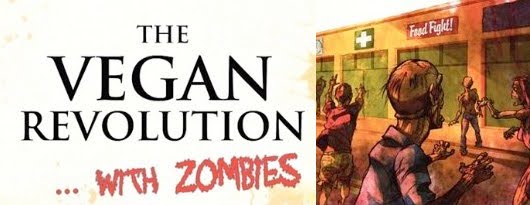
The reality is you can't just do zombies anymore. You have to have a interesting take. In my satire The Vegan Revolution...With Zombies I connected it food issues and mocked of the "with Zombie" literature movement. MR Carey is perhaps the best example with last year's "The Girl With All the Gifts" which is better off not spoiled. It had a totally different take.
The concept sets up a battle of the sexes apocalypse that I admit was not fully explored to the full potential that this novel could have. That is not to say that I didn't like it, I did. This is a short no-nonsense horror novel. It doesn't beat you over the head with concept or message. That might seem like a positive but I actually think this needs more exploration of those issues certainly would have helped the novel stand out.
The novel has a interesting prologue that subtly points to how teen age boys treat young women. It marks a shift in the main character when we shoot ahead three years. The Point of view shifts in the novel several times but the main character was Allie, a woman who takes nicely to the Apocalypse, she knows how to shoot, and track, and becomes know for grabbing Ferals to study. Her camp has one of the scientists who worked at the research facility. At the same time the Ferals numbers seem to be growing, they are perhaps not as mindless as once thought. Allie begins to suspect that the ferals are becoming organized and coming after their camp.
The action and suspense are carried with incredible skill. The story doesn't drag at any point, knowing the publisher and co-writer's film background it is easy to assume this story was developed to be a film project. Two parts stuck as favorites of mine, in chapter thirty, the authors create a great sense of dread, we will read and discuss this in the audio interview. The action switches from first person to third and back and forth depending on the point of view. This can be distracting but after the first switches I didn't notice.
One aspect that was missing is a deep look at fears women carry of men naturally. Think of the issues of street harassment. Some women can not walk down the street without being objectified. One out of every three women have been sexually assaulted. These are sensitive issues but one that I think could have been explored more deeply in a novel that takes place in a world where only women remain sane. The novel does however tackle one of these issues in a major way towards the end that cannot be talked about without spoilers. Both Audio bonuses will discuss this message in the story. This reveal on page 271.
At the same time I respect Feral for for not being too deep. It is a excellently told story, and I was turning pages no problem. I filled in a alot of gaps myself well reading it. Feral is a good, and entertaining read that comes very close to expanding the genres. I admit as much as I love Evenson I think MR Carey's The Girl With all the Gifts is better example of expanding the zombie genre but both are worth reading.
BONUS MATERIAL:
Check out this 40 minute audio review of Feral featuring myself and Critic Marvin Vernon. He blogs at: thenovelpursuit.blogspot.com
BRIAN EVENSON INTERVIEW:
On youtube:
Interview:
Review:
Paperback, 256 pages
Published April 2017 by Anchor Books
This was interesting book and project. Anyone who has followed my reviews over the years should be aware that Brian Evenson (writing here under the very crafty pen name BK) is one of my favorite authors. Pretty much anything he is involved in I want to read. that was the selling point for me. Evenson is one of the best writers working today who is considered high literature even though his work is certainly horror and at times Science Fiction. Respected by genre fans and shelved in high literature in powell's city of books Evenson is a unique voice in modern fiction. The BK pen has been used for more commercial projects like media tie-ins although this is the first time a BK Evenson book has been connected to an original project.
Co-written with James Demonaco who is known for the Purge movies, I think most readers will come to this book through his work. I hope they will progress to check out Evenson's Immobility or Last Days. I have to admit I have not seen the Purge movies, I will try now to get to them. I do respect his script for the Negotiator which I think is a underrated action drama.
Feral has several times in reviews been called a zombie novel, and in many senses it is. It hits all the tropes and standard plot points that make Zombie fans feel comfortable. For me I think Feral is more in my favorite kinda of sub-genre of horror. What I call the high concept Apocalypse. Notables in this genre are diverse with some of my favorites being John Shirley's Demons about corporations using environmental disasters to raise demons or Tim Lebbon's The Silence about blind monsters who hunt by sound. Feral is about a epidemic that turns men into raging monsters.
The reality is you can't just do zombies anymore. You have to have a interesting take. In my satire The Vegan Revolution...With Zombies I connected it food issues and mocked of the "with Zombie" literature movement. MR Carey is perhaps the best example with last year's "The Girl With All the Gifts" which is better off not spoiled. It had a totally different take.
The concept sets up a battle of the sexes apocalypse that I admit was not fully explored to the full potential that this novel could have. That is not to say that I didn't like it, I did. This is a short no-nonsense horror novel. It doesn't beat you over the head with concept or message. That might seem like a positive but I actually think this needs more exploration of those issues certainly would have helped the novel stand out.
The novel has a interesting prologue that subtly points to how teen age boys treat young women. It marks a shift in the main character when we shoot ahead three years. The Point of view shifts in the novel several times but the main character was Allie, a woman who takes nicely to the Apocalypse, she knows how to shoot, and track, and becomes know for grabbing Ferals to study. Her camp has one of the scientists who worked at the research facility. At the same time the Ferals numbers seem to be growing, they are perhaps not as mindless as once thought. Allie begins to suspect that the ferals are becoming organized and coming after their camp.
The action and suspense are carried with incredible skill. The story doesn't drag at any point, knowing the publisher and co-writer's film background it is easy to assume this story was developed to be a film project. Two parts stuck as favorites of mine, in chapter thirty, the authors create a great sense of dread, we will read and discuss this in the audio interview. The action switches from first person to third and back and forth depending on the point of view. This can be distracting but after the first switches I didn't notice.
One aspect that was missing is a deep look at fears women carry of men naturally. Think of the issues of street harassment. Some women can not walk down the street without being objectified. One out of every three women have been sexually assaulted. These are sensitive issues but one that I think could have been explored more deeply in a novel that takes place in a world where only women remain sane. The novel does however tackle one of these issues in a major way towards the end that cannot be talked about without spoilers. Both Audio bonuses will discuss this message in the story. This reveal on page 271.
At the same time I respect Feral for for not being too deep. It is a excellently told story, and I was turning pages no problem. I filled in a alot of gaps myself well reading it. Feral is a good, and entertaining read that comes very close to expanding the genres. I admit as much as I love Evenson I think MR Carey's The Girl With all the Gifts is better example of expanding the zombie genre but both are worth reading.
BONUS MATERIAL:
Check out this 40 minute audio review of Feral featuring myself and Critic Marvin Vernon. He blogs at: thenovelpursuit.blogspot.com
BRIAN EVENSON INTERVIEW:
On youtube:
Interview:
Review:

Sunday, May 21, 2017
Book Review: Kindred: A Graphic Novel Adaptation
Kindred: A Graphic Novel Adaptation
by Octavia E. Butler, John Jennings (Illustrations), Damian Duffy (Adapted by)
 Hardcover, 240 pages
Published January 2017 by Abrams Books
OK this read was the library version of a impulse buy. I saw it sitting on the new release shelf and grabbed it. I am an Octivia Butler fan in general, in particular I love her Parable books. Like many readers I feel cheated by the universe that Butler was never able to finish in that series. I don't know how, in the 35 years since her masterpiece Kindred has been out that I never got around to reading it.
Half way through this book I became upset with myself that I have not read the novel first, but the graphic novel was in front of me so I kept reading. I can't compare it to the novel, but I can only state how this book made me feel. It looks amazing in a slick hardcover with fantastic art by John Jennings and A short but sweet introduction by the great Nnedi Okorator. The story of the two authors personal communications added depth to the artist whose story we were about to read. A perfect introduction to Butler the woman, and Kindred is a great example of Butler the story teller.
The story starts in the 70's - even in liberal southern California Dana and Kevin experience racism. The couple are both writers Kevin a White man and Dana a black woman. The story starts when Dana is suddenly transported through time to the early 19th century in the old south. There she saves the life of a young boy named Rufus. She is not in the past for long, when she returns to the 70's she discovers that Rufus was her Great great grandfather and also the slave owner of her descendants.
The means of the time travel is never explained but Dana quickly figures out she is tied to Rufus, being brough back and forth in time to key moments his life is in danger. Dana believes that she is being brought back in time to save her family line and in a sense her own life.
Eventually her husband come with her. holding on to her as she is pulled through time. Kindred is a neat example of Science Fiction horror using the strength of genre to explore and understand one of the most brutal aspects of our history. The most intense parts of the novel come from Dana's experience of going from a free liberated woman to a a part of the slave system. It is not as cut and dry as she gets there and leads a rebellion. That might seem like a path for the story but realistically that makes no sense story wise.
Dana has to keep Rufus alive and she has to accept some painful actions on his part if her life/ family are ever to happen. This novel has moral dilemmas one after another that drive the story. The plantation, is a abusive and awful place, but if they kill the slaver master the family will be sold and broken up. Time travel is less important to the story than the mountain sized moral dilemmas that drive the novel.
The art is fantastic, but it is the hardcover presentation that is most impressive thing about this project outside of the story itself. I would love to see more Butler novels get this treatment. Big thumbs up.
Hardcover, 240 pages
Published January 2017 by Abrams Books
OK this read was the library version of a impulse buy. I saw it sitting on the new release shelf and grabbed it. I am an Octivia Butler fan in general, in particular I love her Parable books. Like many readers I feel cheated by the universe that Butler was never able to finish in that series. I don't know how, in the 35 years since her masterpiece Kindred has been out that I never got around to reading it.
Half way through this book I became upset with myself that I have not read the novel first, but the graphic novel was in front of me so I kept reading. I can't compare it to the novel, but I can only state how this book made me feel. It looks amazing in a slick hardcover with fantastic art by John Jennings and A short but sweet introduction by the great Nnedi Okorator. The story of the two authors personal communications added depth to the artist whose story we were about to read. A perfect introduction to Butler the woman, and Kindred is a great example of Butler the story teller.
The story starts in the 70's - even in liberal southern California Dana and Kevin experience racism. The couple are both writers Kevin a White man and Dana a black woman. The story starts when Dana is suddenly transported through time to the early 19th century in the old south. There she saves the life of a young boy named Rufus. She is not in the past for long, when she returns to the 70's she discovers that Rufus was her Great great grandfather and also the slave owner of her descendants.
The means of the time travel is never explained but Dana quickly figures out she is tied to Rufus, being brough back and forth in time to key moments his life is in danger. Dana believes that she is being brought back in time to save her family line and in a sense her own life.
Eventually her husband come with her. holding on to her as she is pulled through time. Kindred is a neat example of Science Fiction horror using the strength of genre to explore and understand one of the most brutal aspects of our history. The most intense parts of the novel come from Dana's experience of going from a free liberated woman to a a part of the slave system. It is not as cut and dry as she gets there and leads a rebellion. That might seem like a path for the story but realistically that makes no sense story wise.
Dana has to keep Rufus alive and she has to accept some painful actions on his part if her life/ family are ever to happen. This novel has moral dilemmas one after another that drive the story. The plantation, is a abusive and awful place, but if they kill the slaver master the family will be sold and broken up. Time travel is less important to the story than the mountain sized moral dilemmas that drive the novel.
The art is fantastic, but it is the hardcover presentation that is most impressive thing about this project outside of the story itself. I would love to see more Butler novels get this treatment. Big thumbs up.

Saturday, May 20, 2017
Book Review: Lost Girl by Adam Nevill
Lost Girl by Adam Nevill
 Paperback, 448 pages
Published October 2016 by Pan Macmillan
This looks like the last in my ecological horror/ Climate change Dystopia-a-thon. Not a bad way to finish off. Adam Nevill is a British horror author who was first suggested to me by my local Bookseller Mysterious Galaxy and their horror expert Rob Crowther. He suggested the book House of Small Shadows which I read and reviewed here on the blog last year. I was not a big fan of that novel, despite acknowledging that it was a good and well written book that just didn't work for me in part because I don't find dolls creepy and that is a huge part of the tone-setter.
What do I find creepy? Two things that creep me out big time are unchecked environmental destruction and child molesters, in that sense Lost Girl worked as horror novel. Because it is set in the near future (2053) it can be viewed as both Science fiction and horror, much like the classic I just reviewed last time - The Sheep Look Up. Lost Girl is in one sense a full blown climate-dystopia, but on the other hand one thing I was impressed by is Nevill never let this backdrop overwhelm the story.
Yes it is climate change novel, and that is important for setting up the lawless- and hopeless-ness of this near future Britain. This story could not exist in our world today. The main plot of the story is about a man named "The Father." This very Cormac Macarthy-like trick had the potential to drive me nuts over 437 pages. Thankfully it worked alright here. The Father is driven mad when his four year old daughter is taken from his back yard. After two years of nothing The Father decides he has to use any means to find his Daughter.
Why has everyone given up looking for her? The country has a refugee problem, Hurricane season is ramping up and crops are failing. Europe is staring down the hottest summer on record and frankly no one gives a shit about his daughter. the trail leads him into a nasty underworld of pedophiles, trafficking gangs and police corruption.
My mind was not blown by this novel, but I really enjoyed it and thought it was a very solid effort. Nevill is clearly a word-smith but never loses sight of the story. Without spoiling the ending the last act of the book didn't work as well as the first two acts. I mean I liked it enough to give it four of five stars. The book lost that fifth star by not providing an answer to the mystery that I found super believable.
I can't discuss it without spoiling the ending, but the person behind the theft of the daughter was something I didn't 100% buy into. That said the ending may work for others, and the novel along the way provides more than the cover price's value of scares. Nevill has a lyrical prose style but knows how to build an uncomfortable but fascinating world on the page.
Thumbs up.
Paperback, 448 pages
Published October 2016 by Pan Macmillan
This looks like the last in my ecological horror/ Climate change Dystopia-a-thon. Not a bad way to finish off. Adam Nevill is a British horror author who was first suggested to me by my local Bookseller Mysterious Galaxy and their horror expert Rob Crowther. He suggested the book House of Small Shadows which I read and reviewed here on the blog last year. I was not a big fan of that novel, despite acknowledging that it was a good and well written book that just didn't work for me in part because I don't find dolls creepy and that is a huge part of the tone-setter.
What do I find creepy? Two things that creep me out big time are unchecked environmental destruction and child molesters, in that sense Lost Girl worked as horror novel. Because it is set in the near future (2053) it can be viewed as both Science fiction and horror, much like the classic I just reviewed last time - The Sheep Look Up. Lost Girl is in one sense a full blown climate-dystopia, but on the other hand one thing I was impressed by is Nevill never let this backdrop overwhelm the story.
Yes it is climate change novel, and that is important for setting up the lawless- and hopeless-ness of this near future Britain. This story could not exist in our world today. The main plot of the story is about a man named "The Father." This very Cormac Macarthy-like trick had the potential to drive me nuts over 437 pages. Thankfully it worked alright here. The Father is driven mad when his four year old daughter is taken from his back yard. After two years of nothing The Father decides he has to use any means to find his Daughter.
Why has everyone given up looking for her? The country has a refugee problem, Hurricane season is ramping up and crops are failing. Europe is staring down the hottest summer on record and frankly no one gives a shit about his daughter. the trail leads him into a nasty underworld of pedophiles, trafficking gangs and police corruption.
My mind was not blown by this novel, but I really enjoyed it and thought it was a very solid effort. Nevill is clearly a word-smith but never loses sight of the story. Without spoiling the ending the last act of the book didn't work as well as the first two acts. I mean I liked it enough to give it four of five stars. The book lost that fifth star by not providing an answer to the mystery that I found super believable.
I can't discuss it without spoiling the ending, but the person behind the theft of the daughter was something I didn't 100% buy into. That said the ending may work for others, and the novel along the way provides more than the cover price's value of scares. Nevill has a lyrical prose style but knows how to build an uncomfortable but fascinating world on the page.
Thumbs up.

Book Review: The Sheep Look Up by John Brunner
The Sheep Look Up by John Brunner
 Paperback, 388 pages
Published May 2003 by BenBella Books (first published August 1972)
Nebula Award Nominee for Best Novel (1972)
“She recalled him as a forceful and witty speaker with a ready repartee and a penetrating voice. He had once, for example, put down a spokesman for the pesticide industry with a remark that people still quoted at parties: "And I presume on the eighth day God called you and said, 'I changed my mind about insects!”
― John Brunner, The Sheep Look Up
This is my second time reading this novel and it was just as powerful the second time. The Sheep Look Up is a huge influence on the novel I just finished writing. I waited until that was done to give it a re-read. It is of course apart of my eco-horror Dystopia-a-thon. While not as Climate change orientated as the others it is the oldest books in the series of books I am reading on these themes.
It is going to be impossible to talk about this book without giving context for the time in history when I read them. Both were times when the novel seemed to be "more important than ever!" or "Speaking to our times." I mean this novel is almost 50 years old. It would be easy to write it off, and say how much of it could Brunner have gotten correct if the world is still here. We are still breathing, drinking and more safely. For those of you who are not familiar with the works of John Brunner (who died in 1992) the great British Science Fiction I have included interviews with him. I mean he wrote about something that looks very much like the internet in in the early 70's. His Novel Shockwave Rider not only for saw the internet but viruses, and coined the term worm.
He had powers of prediction, and look Brunner wrote pulp sci-fi, but he had three novels considered his masterpieces that rose above the others, Shockwave Rider, Stand on Zanibar and of course The Sheep Look Up. The last two were both ecologically themed.
The Sheep Looks Up predicts everything from reality TV, Fake news, cities that need air filter masks (see China), the use of emergency actions to suspend basic rights, radical environmentalism, The stigma of being anti-capitalism for being ecologically minded,Micro-organism resistance to antibiotics, raging forest fires, Financial bailouts for failing corporations...Take a breath I mean there is more. John Brunner saw the future folks.
The edition I read came out early in the George W. Bush era, it was re-issued at the time and I infact bought my copy from radical environmentalists selling it at a lecture. It would be easy to look back at the time of that release and say we were all scared of what the Bush era would mean for the environment. In hindsight it was bad, but honestly the Clinton years were not a cakewalk for the planet or defenders of it. Obama was hardly better, come on what did he really do? He was not the disaster of the guys before and after him but what did he really do?
Trump is the nightmare of the Sheep Look Up in the making. This novel is a exploration of the consequences of industry unleashed. When our new president puts the EPA under the control of a man who was determined to kill it, then we see the possibility that a novel 50 years could go from a quaint warning to a blueprint. At time the resistance of Trainites seemed corny compared to the real life eco- movements, and yet at others times smart. I wish that the polluters and destroyers of the earth would have to drive around with skull and crossbones on their cars.
The novel itself is amazing well written but it is not a easy-peasy read, it is full of point of views shifts and is more of a series of snapshots that the story of one main character. The back cover makes it sound much more focused on Train and his eco-defense radicals than it actually is. Sheep goes chapter by chapter across one year in the earth of earth choked slowly by environmental destruction. The progression is quick but the novel which constantly switches Point of view takes some patience. In many ways it operates like a short story collection.
It would be easy to write off this 50 year old novel as hyperbole, certainly we have not seen the world it predicts yet. But lets be clear warning novels like Alas Babylon do not lose merit because we never had a nuclear war. The work of Rachel Carson and the landmark Silent spring did alot, and certainly eco-awareness is better than it was. We should be glad that we didn't see this world, but the reality is that Brunner's vision is still possible. With President Trump threatening to end many of the laws keeping corporations in check we may need Austin Train soon enough.
He talks about Sheep Look Up 14 minutes into this video:
Paperback, 388 pages
Published May 2003 by BenBella Books (first published August 1972)
Nebula Award Nominee for Best Novel (1972)
“She recalled him as a forceful and witty speaker with a ready repartee and a penetrating voice. He had once, for example, put down a spokesman for the pesticide industry with a remark that people still quoted at parties: "And I presume on the eighth day God called you and said, 'I changed my mind about insects!”
― John Brunner, The Sheep Look Up
This is my second time reading this novel and it was just as powerful the second time. The Sheep Look Up is a huge influence on the novel I just finished writing. I waited until that was done to give it a re-read. It is of course apart of my eco-horror Dystopia-a-thon. While not as Climate change orientated as the others it is the oldest books in the series of books I am reading on these themes.
It is going to be impossible to talk about this book without giving context for the time in history when I read them. Both were times when the novel seemed to be "more important than ever!" or "Speaking to our times." I mean this novel is almost 50 years old. It would be easy to write it off, and say how much of it could Brunner have gotten correct if the world is still here. We are still breathing, drinking and more safely. For those of you who are not familiar with the works of John Brunner (who died in 1992) the great British Science Fiction I have included interviews with him. I mean he wrote about something that looks very much like the internet in in the early 70's. His Novel Shockwave Rider not only for saw the internet but viruses, and coined the term worm.
He had powers of prediction, and look Brunner wrote pulp sci-fi, but he had three novels considered his masterpieces that rose above the others, Shockwave Rider, Stand on Zanibar and of course The Sheep Look Up. The last two were both ecologically themed.
The Sheep Looks Up predicts everything from reality TV, Fake news, cities that need air filter masks (see China), the use of emergency actions to suspend basic rights, radical environmentalism, The stigma of being anti-capitalism for being ecologically minded,Micro-organism resistance to antibiotics, raging forest fires, Financial bailouts for failing corporations...Take a breath I mean there is more. John Brunner saw the future folks.
The edition I read came out early in the George W. Bush era, it was re-issued at the time and I infact bought my copy from radical environmentalists selling it at a lecture. It would be easy to look back at the time of that release and say we were all scared of what the Bush era would mean for the environment. In hindsight it was bad, but honestly the Clinton years were not a cakewalk for the planet or defenders of it. Obama was hardly better, come on what did he really do? He was not the disaster of the guys before and after him but what did he really do?
Trump is the nightmare of the Sheep Look Up in the making. This novel is a exploration of the consequences of industry unleashed. When our new president puts the EPA under the control of a man who was determined to kill it, then we see the possibility that a novel 50 years could go from a quaint warning to a blueprint. At time the resistance of Trainites seemed corny compared to the real life eco- movements, and yet at others times smart. I wish that the polluters and destroyers of the earth would have to drive around with skull and crossbones on their cars.
The novel itself is amazing well written but it is not a easy-peasy read, it is full of point of views shifts and is more of a series of snapshots that the story of one main character. The back cover makes it sound much more focused on Train and his eco-defense radicals than it actually is. Sheep goes chapter by chapter across one year in the earth of earth choked slowly by environmental destruction. The progression is quick but the novel which constantly switches Point of view takes some patience. In many ways it operates like a short story collection.
It would be easy to write off this 50 year old novel as hyperbole, certainly we have not seen the world it predicts yet. But lets be clear warning novels like Alas Babylon do not lose merit because we never had a nuclear war. The work of Rachel Carson and the landmark Silent spring did alot, and certainly eco-awareness is better than it was. We should be glad that we didn't see this world, but the reality is that Brunner's vision is still possible. With President Trump threatening to end many of the laws keeping corporations in check we may need Austin Train soon enough.
He talks about Sheep Look Up 14 minutes into this video:
 “Next, the stalled cars had their windows opaqued with a cheap commercial compound used for etching glass, and slogans were painted on their doors. Some were long: THIS VEHICLE IS A DANGER TO LIFE AND LIMB. Many were short: IT STINKS! But the commonest of all was the universally known catchphrase: STOP, YOU'RE KILLING ME!”
― John Brunner, The Sheep Look Up
“Next, the stalled cars had their windows opaqued with a cheap commercial compound used for etching glass, and slogans were painted on their doors. Some were long: THIS VEHICLE IS A DANGER TO LIFE AND LIMB. Many were short: IT STINKS! But the commonest of all was the universally known catchphrase: STOP, YOU'RE KILLING ME!”
― John Brunner, The Sheep Look Up


Saturday, May 6, 2017
Book Review: New York 2140 by Kim Stanley Robinson
New York 2140 by Kim Stanley Robinson
 Hardcover, 613 pages
Published March 2017 by Orbit
My favorite read of the year last year was KSR's Aurora and 2312 was a masterpiece to me, so as you can imagine I consider Robinson to be on quite a roll. I just finished a eco-horror novel and decided to go on ecological horror/ Dystopia reading kick. It was cool after the Water Knife to go somewhere totally different farther into the future. The title tells you the setting but lets explain the world a bit deeper.
Robinson is no stranger to ecological themed books...He wrote a trilogy that was recently repacked as a epic single novel called Green Earth, and he explored these issues in his early series The Wild Shore (1984), The Gold Coast (1988) and Pacific Edge (1990). I reviewed the Wild Shore here.
As for this book. The sea levels have risen over that time including two planet wide "pulses" known and the first and second pulse. After the second pulse the sea level has encroached 50 feet from where it is today. That is enough to create what the book calls ten thousand Katrina's. New York City has become a super venice, the sky line growing taller and certain parts of the city are just gone.
The story centers mostly around the inhabitants of a building called the Met. 2,000 or more people live in this co-op building that has investors interested in buying it. All the Characters are connected to this building. There are several characters and POV's that range from two hackers living on the farm roof-top, to the super and a woman who has reality TV flying ina airships rescusing endangered species. There are probably eight characters we follow and their chapters form the basis of the shifting narrative. In Between we have chapters titled Citizen that appear to be a history lesson speaking directly to the reader. The citizen chapters majorly violate one of the so-called rules of writing science fiction by information dumping but here in this novel it was one of the more interesting parts.
Story kicks off with Mutt and Jeff the hackers who have this idea for undermining global finance by hacking the global money networks. KSR uses this story line to shine a light on the failures of Capitalism. This appears to be inspired by the too big to fail bailout that the banks got themselves. I didn't find this story as interesting as I think it was meant to be. Bot we geta full spectrum of stories from a wall street romance, to a look at reality culture via the woman in the airship saving polar bears( to me the most interesting of stories) and the best character in the book the building super Vlade.
For the most part I enjoyed reading this book and seeing how KSR weaved these story lines together. While some may see the concept as alarmist, I think a story that casually takes a look at a future adapting to incredible change is important. So why am I so meh about the book. I think it was two hundred pages too long for one thing. I was really ready for it to be done by the time I closed the book.
The Characters are hit or miss. Some like Vlade were fun, others seem cardboard like Inspector Gen, I didn't even realize was black or a woman until I have read half the book. Her character didn't feel rich enough for me. I was interested in this because of the climate change aspects to the story. Robinson has said in interviews that was not his intention at first. He had told his editor that he wanted to write about global finance and suggested in set in the flooded NYC we got a glimpse of in 2312.
I get it, he wanted to make a statement about capitalism. He could've done that in 300 or 400 pages in my opinion. Did I like it? Yes I did. Did I love it like the last two I read. Not at all.
Kim Stanley Robinson on the topic of Sea level. from 4:00 minutes to 22 minutes in this video, from a lecture here in San Diego:
Hardcover, 613 pages
Published March 2017 by Orbit
My favorite read of the year last year was KSR's Aurora and 2312 was a masterpiece to me, so as you can imagine I consider Robinson to be on quite a roll. I just finished a eco-horror novel and decided to go on ecological horror/ Dystopia reading kick. It was cool after the Water Knife to go somewhere totally different farther into the future. The title tells you the setting but lets explain the world a bit deeper.
Robinson is no stranger to ecological themed books...He wrote a trilogy that was recently repacked as a epic single novel called Green Earth, and he explored these issues in his early series The Wild Shore (1984), The Gold Coast (1988) and Pacific Edge (1990). I reviewed the Wild Shore here.
As for this book. The sea levels have risen over that time including two planet wide "pulses" known and the first and second pulse. After the second pulse the sea level has encroached 50 feet from where it is today. That is enough to create what the book calls ten thousand Katrina's. New York City has become a super venice, the sky line growing taller and certain parts of the city are just gone.
The story centers mostly around the inhabitants of a building called the Met. 2,000 or more people live in this co-op building that has investors interested in buying it. All the Characters are connected to this building. There are several characters and POV's that range from two hackers living on the farm roof-top, to the super and a woman who has reality TV flying ina airships rescusing endangered species. There are probably eight characters we follow and their chapters form the basis of the shifting narrative. In Between we have chapters titled Citizen that appear to be a history lesson speaking directly to the reader. The citizen chapters majorly violate one of the so-called rules of writing science fiction by information dumping but here in this novel it was one of the more interesting parts.
Story kicks off with Mutt and Jeff the hackers who have this idea for undermining global finance by hacking the global money networks. KSR uses this story line to shine a light on the failures of Capitalism. This appears to be inspired by the too big to fail bailout that the banks got themselves. I didn't find this story as interesting as I think it was meant to be. Bot we geta full spectrum of stories from a wall street romance, to a look at reality culture via the woman in the airship saving polar bears( to me the most interesting of stories) and the best character in the book the building super Vlade.
For the most part I enjoyed reading this book and seeing how KSR weaved these story lines together. While some may see the concept as alarmist, I think a story that casually takes a look at a future adapting to incredible change is important. So why am I so meh about the book. I think it was two hundred pages too long for one thing. I was really ready for it to be done by the time I closed the book.
The Characters are hit or miss. Some like Vlade were fun, others seem cardboard like Inspector Gen, I didn't even realize was black or a woman until I have read half the book. Her character didn't feel rich enough for me. I was interested in this because of the climate change aspects to the story. Robinson has said in interviews that was not his intention at first. He had told his editor that he wanted to write about global finance and suggested in set in the flooded NYC we got a glimpse of in 2312.
I get it, he wanted to make a statement about capitalism. He could've done that in 300 or 400 pages in my opinion. Did I like it? Yes I did. Did I love it like the last two I read. Not at all.
Kim Stanley Robinson on the topic of Sea level. from 4:00 minutes to 22 minutes in this video, from a lecture here in San Diego:

Subscribe to:
Posts (Atom)