Tuesday, August 28, 2012

Book Review: All Monster Action by Cody Goodfellow

I have had to be very careful when reviewing books written by Cody Goodfellow, or released by Swallowdown Press's mastermind, Jeremy Robert Johnson. It may sound like hyperbole to say that Swallowdown is in the masterpiece business, but look at the releases thus far: Bram Stoker nominated Siren Promised (co-written by Johnson and artist Alan Clark), and Wonderland award winner Silent Weapons for Quiet Wars by Cody Goodfel

low, are indeed worthy. Then you add the other releases, like the darkly poetic Deadheart Shelters by Forrest Armstrong, and the disturbing debut by J.David Osbourne, By the Time We LeaveHere We'll Be Friends,' you have a catalog of masterpieces.

Swallowdown has a focus on horrific dark bizarro, and Goodfellow's new short story collection might be the most gonzo of releases that the press has done. That doesn't make it any less of gem and fits perfectly into Goodfellow's expanding catalog of fucked up weird-ness.

All-Monster Action is a solid collection divided into two parts: Coming Attractions, which includes monster stories, two of which are science fiction, flavored with Goodfellow's gruesome special sauce. The second part is Our Feature Presentation,the title novella divided into three parts. I personally think the highlight of the collection are the two science fiction stories, The Wage of Dinosaurs , and the truly disturbingly gross Care and Feeding of Sea Monkeys. As gross and disturbing as that story is, Goodfellow made me laugh with uncomfortable disgust in almost every story - not the least of which was the description of the monster on page 51.

If Goodfellow's descriptions are not gross enough for you, Nick Gucker (Previews), and Mike Dubish (title story) provide amazing illustrations to add the depth and awesome-ness of this package.

The title novella is a straight gonzo satire/tribute to classic Japanese giant monster Kaiju movies. This novella is chock full of insanity in a way that only Cody Goodfellow can make work. If I tell you that a mad scientist survives by turning himself into an influenza virus, and that the Earth's cities become monsters themselves in order to survive, you mike think that sounds a little too weird. Goodfellow is a master at many things, but what makes his fiction special is that no one else can take ideas that are so weird, disgusting, and at times ridiculous, and make them work quite like he does. There is no author in genre fiction that is more deserving of the title Mad Scientist. That is what he is, a straight up mongoose poop crazy mad scientist of prose.

Is it perfect? Well, All Monster Action might be a little longer than it needs to be, but you'll be laughing and enjoying the ride along the way. I don't see Cody Goodfellow's becoming a household name (unless you live in a really cool house), or mainstream, but there is no doubt that he is one of the best things to happen to horror, science fiction and bizarro fiction in the 21st century. Are you going to be able to say you were there in the early days? Read this book.

Monday, July 9, 2012

Book Review: The Imago Sequence and Other Stories by Laird Barron

I've been long overdue for reading this one. For one thing, Laird and I have several mutual friends, but mostly because he keeps being nominated for awards for his short stories, and has won some: Shirley Jackson award for best collection, World Fantasy award for the novella The Imago Sequence, The International Horror Guild award for Proboscis. By now, I'm sure he has likely been nominated for some other awards as well.

This is an amazing collection. These works will invite comparisons to the most respected authors in the genre, ranging form Lovecraft and Liggoti, to Straub. Those are fair comparisons, but in stories like the horror western, Bulldozer,

Barron shows the gonzo nature that reminds me of authors like Jeremy Robert Johnson, John Shirley and Cody Goodfellow. These three authors write great genre works which are both literature and gonzo. I mean, the first sentence of Bulldozer is "Then he bites off my shooting hand."

The Imago Sequence has nine stories that fit perfectly in the middle. Between literature and insane. Of course, Barron shows strength in creating bizarre and far-out concepts. It's his characters and strength of setting (mostly in the Pacific Northwest) which make the book so powerful.

My favorite pieces include Bulldozer, Proboscis, and the novella The Hallucigenia. The latter is a serious mind fuck - a strange family drama that twists through the lens of an horrific injury and hallucinogenic episodes. I might have been biased, having witnessed several works-in-progress of visual artist JD Bush, who is adapting this novella into a graphic novel. It's the most powerful of stories in a collection filled with powerful stories. Many of the stories even connect with one-another, and hint to an even larger story.

Book Review: Darkly Dreaming Dexter by Jeff Lindsay

Like many, I discovered Dexter from the amazing Showtime television series. If you are a fan of the show, but haven't yet read the novels, then I suggest you check them out. They are different from the show for sure, but no so different that the show was unfaithful to the material. In fact, I think that, at least with the first season, the show stays very faithful to the novel.

The biggest difference between the two for me provides a strength for both. The television series focuses more closely on the B-characters, the supporting story lines. When pondering the story arcs with characters like Bautista, Deb and Rita, one cannot imagine the show without these. I love several of the characters on Dexter who reflect excellent casting and writing.

At the same time, the novel has to be more focused on Dexter as a character because it's a first-person narrative, told from Dexter's point of view. In the novel, our hero doesn't consider himself to be human, or anything like the humans around him. This provides excellent and humorous misanthropic dialogue. This is a highlight of the novel.

While the plot of the novel follows a shorter, more basic take on the season one story line, I was impressed by the breezy style. It is a well written narrative, which made me forget about my dislike for the first person. It's also a page turner; you'll fly right through it.

Saturday, May 12, 2012

The Fifth Sacred Thing by Starhawk

This is an amazing novel. I think Science Fiction boasts more "important" novels than are credited by many non-genre readers. When i say important, I mean the novels which deserve to be taught in school literature classes, ones that should be required reading. This is one for the change makers. Is it a surprise that such an acclaimed Pagan and activist would produce a work which so perfectly balances yin and yang? This, I believe, is this novel's strongest attribute. It is at once a utopian and a dystopian tale. It is a brilliant in-your-face environmental cautionary reflection by Starhawk, and by the end of the story, you will feel as if you have taken a long journey. The characters of The Fifth Sacred Thing are well composed, although one weakness in this category, I feel, was that less attention was given to the primary villain than what I think the book deserves. Starhawk's characters are so real and multi-dimensional and sympathetic, that I found myself stressed out for them during the story's conflicts. Another strong point of this novel which I'm sure will attract a slew of readers, is that it is, not surprisingly, imbued with Earth-based, Goddess-based, Feminist spiritual wisdom and ritual. This is the magik of the book! We are taken on a journey in which those of us who stand to learn more about the way things really are, have this very opportunity. I was delighted and inspired by Starhawk's infusion of life lessons into a very exciting story. However, there is a little too much supernaturalism within the story at times for my taste, and I felt that it overshadowed the gravity of the plot in places. While I didn't mind the four to five-page explanation of the utopian political system, some readers might find this to be a bit over-written. And at times, I found myself having to re-read to remember what the character's relationships were. So, while I did find that some of the writing in this novel can be a bit heavy or confusing, overall I enjoy her style and twisting detail. I do find Starhawk's take (at least here) on non-violent resistance to be possibly naive, and felt that some of the invading military reactions were somewhat unrealistic. The ONE HUGE MAJOR FLAW in this novel are the annoying hippie pagan excuses for eating animals and their reproductive tissues which are presented. To this I say, "Come on, Starhawk; you should know better." Overall, this novel is quite good and well worth the effort. I recommend it highly to everyone - even younger readers.

Saturday, April 14, 2012

The People's History of Sports in the United States


Howard Zinn's classic history book, "A People's History of the United States", is one of the most important books ever written. To say that it should be required as taught in public schools is an understatement. It is a staggering book, and one of its largest impacts is its inspiring a slew of pin-point "People's History" sequels. I have read great entries in the series about the Vietnam War and the Mexican Revolution.

The topic of this book might not seem as important as the aforementioned, but consider how much sports invades our culture. This book tries to dispell the myth of the thoughtless care-free jock. A part of me wished there had been more, but the powerful actions of sports heroes of the past, described here, mostly left me wondering what happened. Where are the activist athletes today?

Charity is really a huge part of the modern sports industry, but standing up against injustice is not. Today racism is less of an issue. Players have stronger unions. So much has changed.

Highlights of this book include: Muhammad Ali, Jessie Owens at the 1936 Berlin Olympics, and the University of Washington's football team's protesting the Vietnam War.

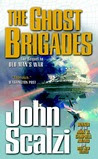
The Ghost Brigades by John Scalzi


This novel is a sequel to my favorite read of last year: Old Man's War. This is the second of a four-book cycle. So far i can say that Scalzi has crafted a second flawless masterpiece of military sci-fi. It's filled to the brim with amazing ideas, a creative universe, and exciting and emotional relevant action. The reason these books rule is due to the rich and vivid characters created by Scalzi. That is saying something since, in this case, the people are quite different from us. These novels are the strongest, geekiest novels of the 21st century.

Sunday, March 25, 2012

Book Review: Full Dark, No Stars by Stephen King


vFull Dark, No Stars by Stephen King

One cannot write as many books as King has written without putting out a few stinkers. But he also has a habit of dropping a book from time to time that serves to remind us that he is a master. To me, Full Dark, No Stars is King's most perfect book since Gerald's Game, and I admit that I didn't or rather, could not, finish Duma Key or Lisey's Story. I wanted to, but couldn't. This collection of four novellas is so strong, I am floored.

King's best works tend to be novellas and short stories. Not to say that he hasn't created masterpieces in some of his novels, probably a dozen or so. I knew that King had some dark, brutal material in him, as his recent collection Just After Sunset includes such material. This new collection, Full Dark, No Stars, contains work stronger than that within Different Seasons, and like that book, has three masterfully written pieces and a fourth very solid entry. I loved all four.

The first within the collection is a classic King tale, set in Nebraska, a place in which King has never lived! 1922 is a first-person period piece, with that bumpkin-on-a-porch narrative at which King excels. King wanted to tell a story set in an isolated rural family environment, before the world was connected by phone lines. The plot revolves around a father and son who murder their wife/mother in order to save the farm which she owns. This dark and tragic story is the weakest of the four in the collection, but still a great read.

The second novella is a painfully hard-to-read rape revenge story entitled Big Driver. I cringed hard at some of King's language describing the rape scene, but I believe that his intentions here are good. This tale is ranked among King's other feminist-themed works such as Rose Madder and Delores Clayborne.

The third entry is a mean-spirited dark comedy called Fair Extension. This is not a new or original tale, but damn is it ever well-written. A man dying of cancer can purchase the cure, but must curse the friend of whom he's been jealous his whole life. I laughed out loud multiple times while reading this one, but geez, was this ever a mean story.

The last story in this collection is a really cool horror tale entitled Good Marriage. The story involves Darcy, who after twenty-seven years of marriage, learns by accident that her husband is a serial killer. King really nails this one, showing his skills by creating amazing suspense and tension for several pages of having the truth be revealed.

This collection is a must-have for King fans, and for fans of horror who think that King has lost the magic touch. This one brings it for sure.